Since the origin of man, change has constantly needed to occur. From the ancient caveman to the modern gentleman, from caves to the modern smart home; humanity has needed to evolve and at an exponential rate. Now more than ever, we need to adapt to our environment on a daily basis. With platforms such as the Internet and Social Media, communication and information can be transferred and received within seconds. As the new age of technology continues to grow rapidly, we as society and the future of our generation need to assure that we can grow and establish an understanding with the fluencies of the digital realm. These 5 Fluencies of the 21st century are process skills that students need to succeed in a fast-changing environment. These method capabilities include critical thinking, problem solving, imagination and innovation. (The 5 Main Fluencies of The 21st Century Learning, 2020).
We have, throughout our lives, been categorised into two of the following: the first being street smart and the other being book smart. Throughout generations, it was taught that knowledge is power, and have constantly forced the youth to believe that in order to succeed, you need to ensure you obtain a college degree. But what can you do with a college degree? Where do you go? Does it really guarantee success? And most importantly, how much critical thinking and life skills does it really teach? The problem with the education system is it encourages students to learn the content of the textbook, and not to apply it to our daily lives. “The whole educational and professional training system is a very elaborate filter, which just weeds out people who are too independent, and who think for themselves, and who don’t know how to be submissive, and so on — because they’re dysfunctional to the institutions.” ― Noam Chomsky (Education System Quotes [178 quotes], 2020) It emphasises that students need to follow a process or procedure to get to a specific result, and where they do not, they lose marks for their process, regardless if its correct or incorrect. This is resulting in students being exceptionally book smart students but lack being street smart wisdom when it arises to an environment outside the classroom. The fluencies have been created to ensure that the gap between a student being street smart and book smart are non-distinguishable, and that they can use what they learn in every environment they come across. i.e. Students who graduate from university tend to take a while to adapt to a working environment. This is as a result of not needing to follow a process that both school and university force us to follow. Where the only aspect that the company is concerned about is the final result, regardless of the process that the employee uses to follow.
Knowing how to acquire the fluencies will not only be beneficial to the graduate students in the working world, but also fellow students that are on the same or similar journey. The following fluencies elaborate on what the fluency is and its importance to the circumstances of a graduate university student.
- Solution Fluency
Solution fluency is the ability to think creatively about solving problems in real time by clearly identifying the problem, planning a suitable solution, presenting the solution and then reviewing the method and the outcome. (Homa, 2020) Solution Fluency needs to be our generations’ focus skill that we need to ensure we possess as a habit. It is imperative to know it and to be able to apply it as we will face many challenges throughout our lives. The process (Referred to as the 6 D’s) includes the following that I will be elaborating on below:
This is an observation whereby a current or possible issue may arise, and a brief plan is drafted on how to conquer it. The problem cannot be too small or too large as it may resist a possible solution being presented. This is also the studying and gathering phase, and the review of specific information on the issue. This helps us to give the context of the problem so that we can more accurately identify it. (Homa, 2020) i.e. As a graduate student, you find an issue arising of finding a job or some form of income, you need to define what the issue or issues you are having and try think about how to overcome it.
(Life photomanipulation illustrator background samstoobad fused define Wallpaper, 2020)
The Discovery phase as part of the fluency solution is the phase of research, gathering and evaluating information. The issue is then given in context in order to ensure that the best possible solution is generated. (Homa, 2020) i.e. Once your issue of not being able to get a job is defined, then discover as to why that is. With thorough research, your question as to “why not,” can be concluded.
(Discover Card: 2019 Dispute & Chargeback Mandates, 2020)
The dream phase is somewhat a combination of optimism as well as desire. It opens our emotions and thoughts to any possibility – both possible and impossible – and visions to a solution the way we desire it to be. It is the visualisation and imagination to our solution to the problem that arose. (Homa, 2020) i.e. Once the previous phases have been accomplished, dream of where you would like to work or what you would like to do to receive some sort of revenue stream.
(Writer, 2020)
This is the phase where we continue utilizing the gathered information and expertise in order to synthesise solutions. This is the phase where plans are drafted, goals and objectives are established, team positions are defined as well as accountability mechanisms for the team. (Homa, 2020) i.e. This is where you can then design your “Game Plan” as to how you plan on achieving your goals.
(Download Design Word Concept for free, 2020)
The Deliver phase occurs within 2 separate phases, namely: Produce and Publish. It involves both completing the solution (Produce), and then making the actual presentation or demonstration (Publish). By producing and publishing the solution to the given problem that arose, it eliminates further time to brainstorm and any other potential ideas. (Homa, 2020) i.e. Once your drafted plan is designed, it is then time to deliver it. This means producing your results and publishing them to your family, friends and mentors.
(Mozer and Mozer, 2020)
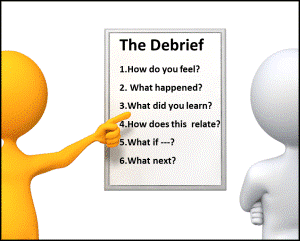
The debrief phase is where you review your work and where your understanding of the way you composed your task or operation (i.e. University assignment, Work related task). Reflection on the task needs to be achieved to determine what could’ve been done better and any solutions to better your problem-solving technique and approach. (Homa, 2020) i.e. When you have achieved your goals and dreams, you must then review and reflect on those goals. This is in order to understand where you may have gone wrong and what you could’ve changed.
(Fuini-Hetten, 2020)
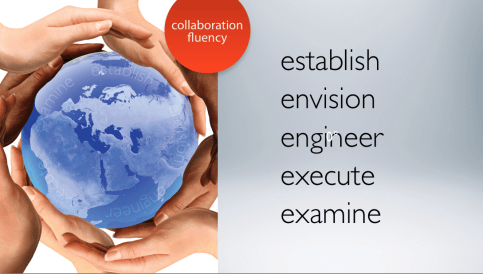
Working, playing, and learning in today’s digital world increasingly involves working with others. It is the collaborative spirit that will drive change in our global economy, in our social networks, and in our ability to produce value and quality goods. Fluency of collaboration is the ability to work successfully and to interact with real and virtual partners. i.e. As a graduate student, you now find a job at a digital agency based in Sandton. The following below represent the process whereby Collaboration Fluency takes place:
- Establish
That includes group setting; roles and responsibilities; standards; project scope; information needs; direction; and committing all of that to a group contract. (Quickstart Guide: Collaboration Fluency, 2020) i.e. You are a part of a team in which focuses on freelance writing in the marketing industry. As a new project arises, you are teamed with a few colleagues to design a start up’s brand identity.
At this stage the group is visualizing, identifying and analysing the purpose; the question, the challenge, the preferred solution or the objective. They also generate an agreement on the result and evaluation parameters. (Quickstart Guide: Collaboration Fluency, 2020) i.e. The team must then decipher what the client needs and wants for his / her business and begin brainstorming on the ideas.
Developing a workable strategy involves carrying out all the steps required to get us where we’re from and where we want to be. Then again, the team works together to collaborate and build the strategy backwards from the top. (Quickstart Guide: Collaboration Fluency, 2020) i.e. This is where the team then decides on a plan to strategically achieve the desired results in the timeframe allocated.
The plan is introduced here, with an emphasis on the construction of a concrete, feasible solution or product better suited to individual needs and the attributes of the group as a whole. (Quickstart Guide: Collaboration Fluency, 2020) i.e. This is when the team ensures that all activities are according to the allocated plan.
Examination means taking a look back at the process and deciding whether the challenge was met, and the target accomplished, the areas of progress considered, where achievements are appreciated and to have positive reviews. (Quickstart Guide: Collaboration Fluency, 2020) i.e. Once the client’s brand identity has been completed, a review needs to be conducted in order to ensure that it is perfect before presenting it to the client.
(Collaboration Fluency – allthingslearning, 2020)
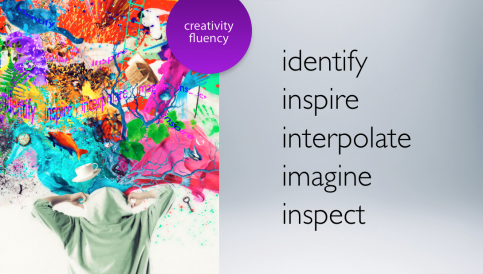
The fluidity of creativity is how creative talent adds meaning through design, architecture, sculpture, and storytelling etc. As we are imaginative human beings, it implies imagination, like every other ability, can be taught and learned. This is a whole cycle in the brain, with all hemispheres operating together. i.e. Let’s use the following as an example to elaborate more about the creative fluency: You as a newly graduate student deciding to start your own business with the knowledge gained at university, instead of working for another firm. The following presented below explain the steps shown as an overview to creative fluency:
It implies the distinction between the elements and the parameters of the desired response. This is about finding out what to make and what to build when you face constraints or restrictions. (Quickstart Guide: Creative Fluency, 2020) i.e. Prior to starting your business, you need to ensure that you have researched what you need (documentation etc) as well as what you are going to do, along with contingency plans etc.
In this next point, the adventure starts by enhancing your imagination that’s rich in sensory information. This includes some events, experiences, animations, or interactions that are life-changing and memorable. (Quickstart Guide: Creative Fluency, 2020) i.e. You now begin your business and use your imagination to enhance your business’ profitability by using innovation.
Interpolate means finding a defined pattern inside known data. It’s all about “connecting the dots” while searching for simple trends and abstractions at a higher degree within the sensory input. (Quickstart Guide: Creative Fluency, 2020) i.e. After operations for a several months, you discover that certain ventures worked consistently or even improved, whilst others failed. You need to determine this pattern in order to know which operations to keep and which to eliminate.
It is the ultimate synthesis of Inspirer’s earlier stages and then Interpolate. The convergence of these phases brings about the birth of your creativity. (Quickstart Guide: Creative Fluency, 2020) i.e. You then focus on your primary form of operations that work for you whilst constantly improving it and innovating it.
With our new creative idea now a reality, we have questions for ourselves about the effectiveness and viability of the new concept, and if so, completed within current timeframe and budget. (Quickstart Guide: Creative Fluency, 2020) i.e. Your operation or project needs to be reviewed and reflected upon to improve it durability as well as feasibility.
(Collaboration Fluency – allthingslearning, 2020)
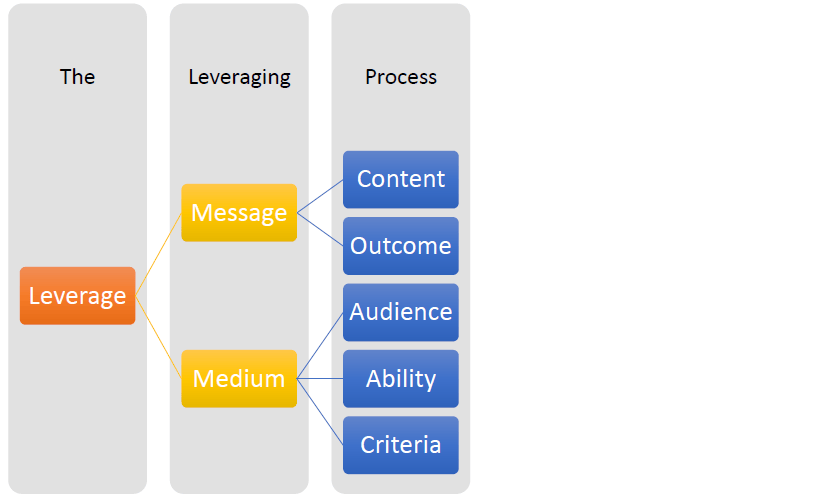
In reality, the first aspect of media involves reading (listening) the media; the second involves how we use it for our own production (communication). Such fluidity concerns both the dimension of connectivity, and literacy. Without knowing how to use the technology, we can’t produce something, but without understanding that, we can’t leverage the message. And there may be some repetition between the two units. (five fluencies, 2020). Communication has moved far beyond the domain of text in our digital setting. Our capacity for visual learning needs stimulation from a variety of different sources using rich media. But it doesn’t just operate a digital camera, create a podcast, or write a document. (Collaboration Fluency – allthingslearning, 2020). The 2 components of Media Fluency include:
Listen carefully and decipher the correspondence by distinguishing the media from the letter, verbalizing the letter concisely and distinctly and checking its validity, and then objectively examining the platform for shape, rhythm and consistency with the intended target and intent. (Collaboration Fluency – allthingslearning, 2020).
Take advantage of the most appropriate media for your message considering your message or content and what the desired result is. Then consider the group, the skills and any conditions that have been decided. From here, your message is produced and published using the application of the other fluencies. (Collaboration Fluency – allthingslearning, 2020).
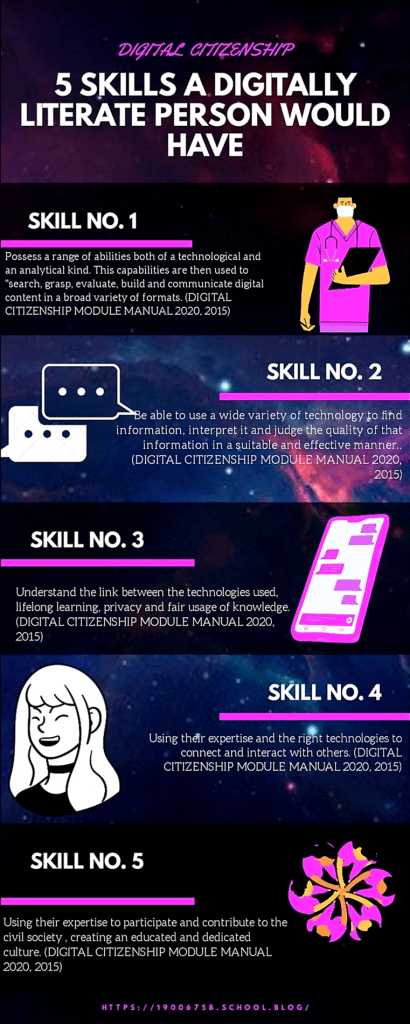
(DIGITAL CITIZENSHIP MODULE MANUAL 2020, 2015)
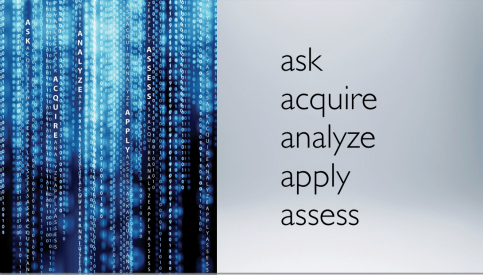
Data is growing significantly; statistics are becoming increasingly outdated and information dependent on such data becomes less enduring. The ability to read this flood of data automatically in all forms is information fluency, in order to extract the important and understand its meaning. The following presents the process of Information Fluency:
- Ask
It involves assembling a collection of important questions about what information or what awareness data is being sought. The trick here is to ask appropriate questions, so that’s how many answers you receive. (Quickstart Guide: Information Fluency, 2020) i.e. Before taking on a venture, task or operation, ensure you ask the relevant questions to experts in the field. This is also known as the Delphi Technique.
- Acquire
It’s not as quick to find details as it used to be. This field provides the most links to and selection of communication resources suitable for all internet and non-digital media. (Quickstart Guide: Information Fluency, 2020) i.e. Knowledge is power. By obtaining and acquiring sufficient knowledge (such as a university degree) you can potentially work in the field that you enjoy.
- Analyse
We will now authenticate, coordinate for all the raw data gathered, and get it all arranged. This stage also involves deciding whether knowledge is real or not, which distinguishes between the positive and the negative. (Quickstart Guide: Information Fluency, 2020) i.e. Just as final examinations arise prior to graduation, you need to decide which content is relevant and important to remember and apply as it is virtually impossible to remember everything.
- Apply
If the data is gathered and tested and finally a solution is developed, the awareness must then be implemented in action in the sense of original purpose for questing information. (Quickstart Guide: Information Fluency, 2020)
This includes open and active conversations on how to fix the issue travel should have been rendered more effective, and how the answer might have been creating could refer to problems of a similar nature. (Quickstart Guide: Information Fluency, 2020)
(Collaboration Fluency – allthingslearning, 2020)
It was said by the famous Warren Buffet, the Oracle of Omaha, that the best investment that anyone could make, is within themselves. Learning these 5 fluencies will never be detrimental, but beneficial to every person, both young and old, in every aspect of lives. As a graduate student, it would be vital to know the fluencies as it would contribute to every aspect of your life, from work tasks to starting your own business. The best way to acquire such skills would be to research the fluencies and develop your knowledge of them; then apply them to every scenario in order for it to become second nature. Since knowledge is power – why not embrace it?
REFERENCE LIST:
2015. DIGITAL CITIZENSHIP MODULE MANUAL 2020. 3rd ed. [Accessed 21 May 2020].
Allthingslearning. 2020. Collaboration Fluency – Allthingslearning. [online] Available at: <https://allthingslearning.wordpress.com/tag/collaboration-fluency/> [Accessed 21 May 2020].
Chargebackgurus.com. 2020. Discover Card: 2019 Dispute & Chargeback Mandates. [online] Available at: <https://www.chargebackgurus.com/blog/discover-card-2019-dispute-chargeback-mandates> [Accessed 21 May 2020].
Digital citizenship. 2020. Five Fluencies. [online] Available at: <https://digitalcitizenshippass.weebly.com/-five-fluencies.html> [Accessed 21 May 2020].
Educational Technology and Mobile Learning. 2020. The 5 Main Fluencies Of The 21St Century Learning. [online] Available at: <https://www.educatorstechnology.com/2014/10/the-5-main-fluencies-of-21st-century.html> [Accessed 4 May 2020].
Freepik. 2020. Download Design Word Concept For Free. [online] Available at: <https://www.freepik.com/free-vector/design-word-concept_2453871.htm> [Accessed 21 May 2020].
Fuini-Hetten, L., 2020. Season 2: Episode 2 – Tips For Debriefing [Podcast] – Tltalkradio. [online] Tltalkradio.org. Available at: <http://www.tltalkradio.org/season-2-episode-2-tips-for-debriefing-podcast/> [Accessed 21 May 2020].
Goodreads.com. 2020. Education System Quotes (178 Quotes). [online] Available at: <https://www.goodreads.com/quotes/tag/education-system> [Accessed 4 May 2020].
Hdwallsbox.com. 2020. Life Photomanipulation Illustrator Background Samstoobad Fused Define Wallpaper. [online] Available at: <https://hdwallsbox.com/life-photomanipulation-illustrator-background-samstoobad-fused-define-wallpaper-8352/> [Accessed 13 May 2020].
Homa, D., 2020. Quick-Start Guide: Solution Fluency. [online] Davidhoma.com. Available at: <http://www.davidhoma.com/SF_handbook.pdf> [Accessed 13 May 2020].
Mozer, T. and Mozer, T., 2020. Can Your Assistant Deliver? – Voicebot.Ai. [online] Voicebot.ai. Available at: <https://voicebot.ai/2019/12/07/can-your-assistant-deliver/> [Accessed 21 May 2020].
Teachingcommons.lakeheadu.ca. 2020. Quickstart Guide: Collaboration Fluency. [online] Available at: <https://teachingcommons.lakeheadu.ca/sites/default/files/inline-files/Collaboration%20Fluency%20handbook.pdf> [Accessed 21 May 2020].
Teachingcommons.lakeheadu.ca. 2020. Quickstart Guide: Creative Fluency. [online] Available at: <https://teachingcommons.lakeheadu.ca/sites/default/files/inline-files/Creativity%20Fluency%20Quickstart%20Guide.pdf> [Accessed 21 May 2020].
Teachingcommons.lakeheadu.ca. 2020. Quickstart Guide: Information Fluency. [online] Available at: <https://teachingcommons.lakeheadu.ca/sites/default/files/inline-files/Information%20Fluency%20Quickstart%20Guide.pdf> [Accessed 21 May 2020].
Writer, B., 2020. Why Can’t We Remember Our Dreams?. [online] livescience.com. Available at: <https://www.livescience.com/62703-why-we-forget-dreams-quickly.html> [Accessed 21 May 2020].